Infertility & IVF Specialists located in Weston, FL
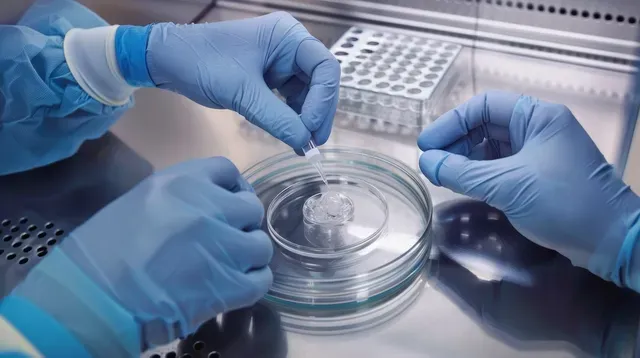
If you're looking to grow your family without undergoing another IVF egg retrieval, consider a frozen embryo transfer (FET) treatment offered at Elite IVF Solutions in Weston, Florida. The team performs frozen embryo transfers, allowing individuals or couples to use previously frozen embryos for pregnancy. By transferring thawed embryos into the uterus, FET provides a flexible, less invasive option. Call or book an appointment online today to learn more.
Frozen embryo transfer (FET) is a fertility treatment in which a previously frozen embryo, created through in vitro fertilization (IVF), is thawed and placed into a woman's uterus. FET allows individuals or couples to use embryos stored from an earlier IVF cycle, providing another opportunity for pregnancy without undergoing a new egg retrieval process.
This process offers flexibility, allowing you to plan the timing of pregnancy based on your family goals and life circumstances.
FET involves several important steps. First, the team will review your medical history, prior IVF cycles, and the quality of your frozen embryos to create a personalized treatment plan. Together, you'll determine whether a natural cycle (which tracks your body's own ovulation) or a medicated cycle (using estrogen and progesterone to prepare the uterus) is best for you.
During this preparation phase, your progress is carefully monitored. Ultrasounds check the thickness of the uterine lining, while blood tests measure key hormone levels to ensure your body is ready for implantation.
On the day of the procedure, the embryo is carefully thawed in the lab and assessed to confirm that it has survived the freezing process. Your provider then gently inserts a thin, flexible catheter into your uterus, using ultrasound guidance to ensure the embryo's accurate placement.
The procedure is typically quick, painless, and similar to a routine gynecological exam. While you may feel mild cramping, anesthesia is rarely needed. After the transfer, your provider usually recommends a brief rest period at the clinic and advises you to avoid strenuous activity or intercourse in the days following. Hormonal support, usually with progesterone, is continued to maintain the uterine lining and encourage implantation.
About 9–12 days after the embryo transfer, the team will schedule a blood test (beta hCG) to check for pregnancy. If the test is positive, you'll continue hormonal support, and follow-up bloodwork will monitor that the pregnancy is progressing normally. Typically, an ultrasound is performed two to three weeks later to visualize and confirm the pregnancy.
Learn more about FET today by calling the office for an appointment or booking online anytime, day or night.
Frozen embryo transfer (FET) is a fertility treatment in which a previously frozen embryo, created through in vitro fertilization (IVF), is thawed and placed into a woman's uterus. FET allows individuals or couples to use embryos stored from an earlier IVF cycle, providing another opportunity for pregnancy without undergoing a new egg retrieval process. The FET process offers flexibility as it allows patients to plan the timing of potential pregnancies.
Dr Lindheim reviews your medical history, previous IVF cycles, and the quality of your frozen embryos. Together, a plan is developed for your FET cycle, including whether a natural or medicated cycle is recommended.
The timing of the transfer is critical and is synchronized with your menstrual cycle. During this step, the goal is to prepare the uterus for implantation.
There are two common approaches:
Monitoring during the part of the cycle includes:
On the day of transfer, the embryo is carefully thawed in the lab. The embryologist will assess the embryo to ensure it has survived the freezing/thawing process and is suitable for transfer.
The transfer procedure is generally quick, painless, and similar to a routine gynecological exam. You may experience mild cramping, but no anesthesia is typically needed. A thin catheter is guided through the cervix into the uterus, and the embryo is placed in the optimal location. Ultrasound guidance is used to ensure precise placement. After the transfer, we recommend that you rest for a short period before resuming your normal activities.
Hormonal support with progesterone (begun prior to the transfer) continues for several days to help maintain the uterine lining. It is recommended to avoid strenuous exercise and intercourse during this time.
About 9 to 12 days after the transfer, a blood test (beta hCG) is done to determine if the embryo has implanted successfully and a pregnancy has begun. If the result is positive, hormonal support with progesterone is continued. Blood tests will be repeated over the next two to four weeks to be sure the pregnancy is progressing normally. An ultrasound will be performed approximately two to three weeks after the first pregnancy test to visualize and assess the pregnancy.