













Table of Contents
Robotic-Assisted Hysterectomy: What You Need to Know
Robotic-assisted hysterectomy benefits include reduced post-operative pain, smaller incisions, and a faster return to normal activities. This minimally invasive procedure uses a robotic surgical system to give your surgeon enhanced precision and control while removing the uterus. At Elite IVF Solutions, we offer robotic surgery as part of our comprehensive reproductive surgical services, helping patients address conditions such as uterine fibroids, endometriosis, or certain gynecologic cancers when clinically appropriate.
Compared to an open hysterectomy, a robotic-assisted hysterectomy results in less blood loss and a shorter hospital stay. Understanding the basics of this procedure helps explain why it is an attractive option for patients.
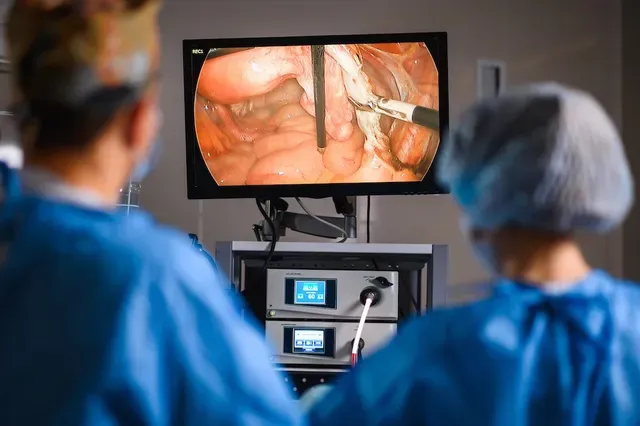
During the operation, our surgeons use a console that provides a magnified three-dimensional view and wristed instruments that allow more precise movements than standard laparoscopy. These technical features can help preserve surrounding tissues and support quicker functional recovery. We perform robotic hysterectomies in our modern Weston facility with a dedicated perioperative team to optimize patient comfort and post-operative care and safety.
The Fundamentals of Robotic-Assisted Hysterectomy
To fully understand this advanced approach, it helps to start with the basics: what it is, when it is used, and the technology behind it.
What Is Robotic-Assisted Hysterectomy?
A robotic hysterectomy is a minimally invasive surgical procedure that removes the uterus using a robotic platform controlled by the surgeon. Unlike traditional open surgery, which requires a large abdominal incision, this approach uses several small incisions through which specialized instruments and a high-definition camera are inserted.
The key distinction lies in how the surgeon operates. With robotic surgery, the surgeon sits at a console in the operating room and controls robotic arms that translate hand, wrist, and finger movements into precise, scaled motions at the surgical site. This eliminates natural hand tremors and allows movements far more precise than the human hand alone can achieve.
The robotic platform does not act autonomously: it responds entirely to the surgeon's real-time commands.
When Is Robotic Hysterectomy Recommended?
Hysterectomy is typically recommended for conditions that have not responded to more conservative treatments. Common indications include uterine fibroids causing heavy bleeding or pressure, endometriosis with deep infiltrating lesions, adenomyosis, chronic pelvic pain, abnormal uterine bleeding, and certain gynecologic cancers or precancerous conditions. Uterine prolapse, where the uterus descends into the vaginal canal, is another frequent reason.
When fibroids are large or numerous, when endometriosis has created extensive adhesions and scar tissue, or when the patient has undergone previous abdominal surgeries, the enhanced dexterity and three-dimensional visualization of the robotic platform help our surgeons navigate challenging anatomy more safely. The same advantages apply for patients with higher body mass index, where traditional laparoscopic access can be technically demanding.
It is important to note that not every hysterectomy requires a robotic approach. A thorough evaluation, including imaging studies and a detailed health history, determines which surgical method best fits each patient’s diagnosis, anatomy, and overall health goals.
The Technology Behind Robotic Surgery
The robotic surgical system consists of three primary components. The surgeon console is where the operating surgeon sits, viewing a magnified, high-definition 3D image of the surgical field while manipulating hand controls and foot pedals. These inputs are transmitted in real time to the patient cart, which holds the robotic arms positioned over the patient. A dedicated surgical assistant remains at the bedside to change instruments and provide direct support.
Attached to the robotic arms are wristed instruments that mimic and exceed the natural range of human hand motion. Unlike rigid laparoscopic tools that move only with the surgeon’s arm and wrist, these instruments articulate at the tip with seven degrees of freedom, enabling suturing, dissection, and tissue handling in tight spaces with remarkable control.
With a clear picture of how robotic hysterectomy works and when it is applied, we can turn to the specific advantages that make it a compelling option for women seeking both effective treatment and an optimized recovery experience.
Key Benefits of Robotic-Assisted Hysterectomy
Faster Recovery and Return to Daily Life
Patients undergoing robotic hysterectomy typically experience a shorter recovery time than those who have open surgery. In our practice, we often see women discharged the same day or after an overnight stay, returning to light activities within two weeks. Clinical data indicates that recovery after robotic hysterectomy ranges from two to four weeks, compared to six to eight weeks for open procedures.
Minimal Scarring and Improved Cosmesis
The tiny incisions used in robotic hysterectomy—measuring just 5 to 12 millimeters—leave minimal scarring that fades over time. Unlike a large abdominal incision required in open surgery, the robotic approach replaces the bikini-line or vertical cut with several small ports. For many patients this results in less post-operative pain and smaller, less visible scars.
Lower Blood Loss and Reduced Surgical Risks
Robotic-assisted hysterectomy has been associated with significantly lower blood loss—often less than 100 milliliters—compared to the 300 to 500 milliliters typical in open procedures. This reduction is due to the enhanced precision and magnified 3D view that allow our surgeons to control bleeding proactively. Additionally, the fine wristed instruments help avoid inadvertent injury to surrounding structures, which can translate to fewer post-operative infections, adhesions, and shorter hospital stays. For patients requiring myomectomy, robotic surgery offers similar benefits, enabling precise removal of fibroids while preserving uterine tissue. However, no surgery is without risk; we discuss each patient’s specific profile carefully to determine the safest approach.
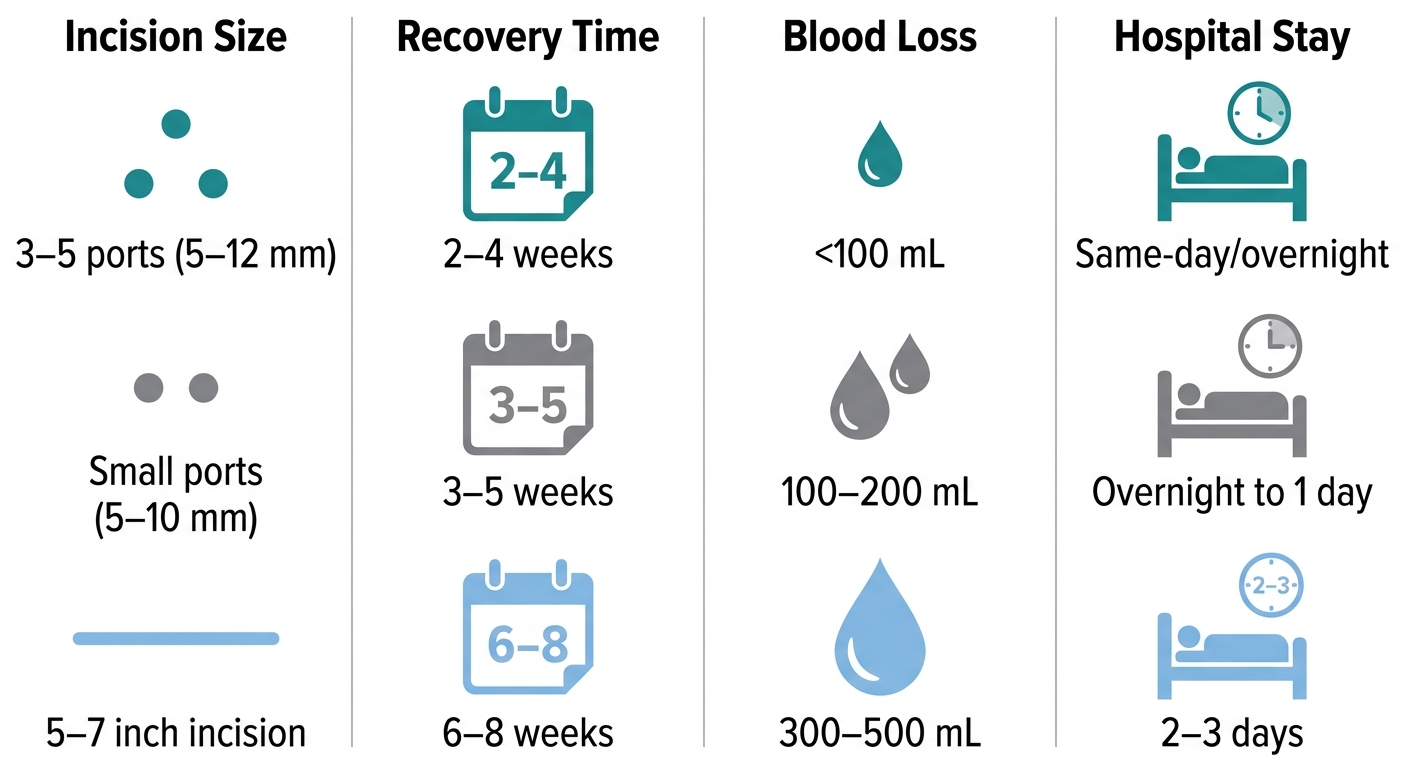
The following table summarizes the key differences across robotic, laparoscopic, and open hysterectomy outcomes:
| Feature | Robotic Hysterectomy | Laparoscopic Hysterectomy | Open Hysterectomy |
|---|---|---|---|
| Incision Size | 3–5 small incisions (5–12 mm) | Similar small incisions (5–10 mm) | Single large incision (bikini line or vertical, 5–7 inches) |
| Scarring Visibility | Minimal, fading | Minimal | More significant, permanent |
| Recovery Time | 2–4 weeks | 3–5 weeks | 6–8 weeks |
| Blood Loss (average) | <100 mL | 100–200 mL | 300–500 mL |
| Return to Work | 2–4 weeks | 3–5 weeks | 6–8 weeks |
| Hospital Stay | Same-day or overnight | Overnight to 1 day | 2–3 days |
| Surgical Precision | High (3D visualization, wristed instruments) | Moderate (2D, straight instruments) | High but requires larger incision |
Robotic hysterectomy consistently demonstrates advantages in recovery speed, scarring, and blood loss, while laparoscopic methods offer similar incision profiles. The choice of technique ultimately depends on each patient’s unique anatomy and medical history, but the outcomes shown in the table help frame an informed discussion with our clinical team.
These benefits are made possible by the sophisticated technology and refined technique of robotic-assisted surgery.
How Robotic-Assisted Hysterectomy Works
To understand how these benefits are realized, it helps to walk through the robotic-assisted hysterectomy procedure itself.
The Robotic System: Surgeon Console and Patient Cart
During robotic surgery, the surgeon sits at a console that provides a magnified, high-definition 3D view of the surgical area. From this console, the surgeon controls robotic arms mounted on a patient cart positioned next to the operating table. These arms hold wristed instruments that can rotate and bend with a range of motion that mirrors and even exceeds that of the human hand. The system translates the surgeon’s hand, wrist, and finger movements into scaled, tremor-filtered motions of the instruments inside the patient’s body. The console also provides a 3D image of the operative field. It also gives the surgeon direct command over the camera and energy devices, so the operative field is always clearly visible. During the operation, a surgical assistant remains at the bedside to change instruments, monitor the patient, and ensure the robotic arms function safely.
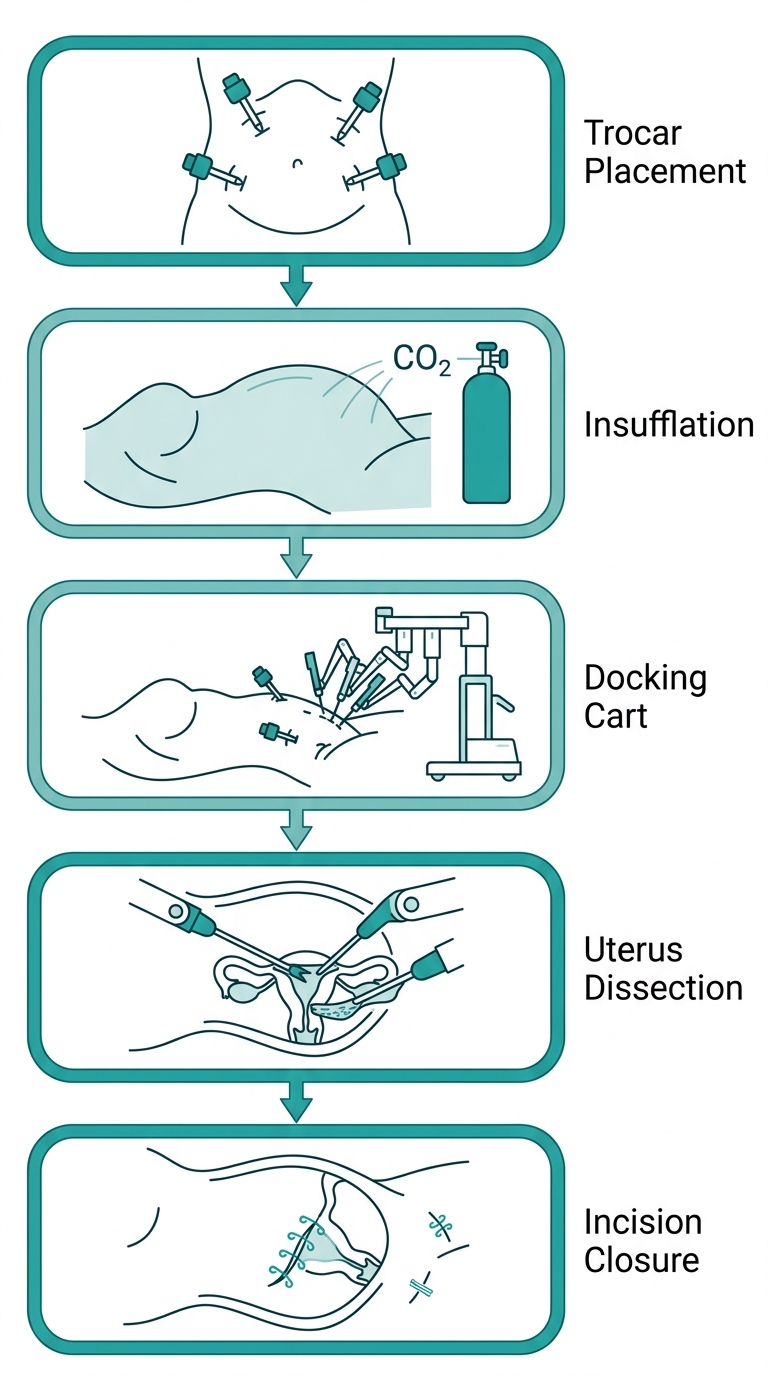
Step-by-Step Surgical Process
We begin this procedure with a few very small abdominal incisions for the placement of trocars. The camera and other instruments are passed through these trocars. The abdomen is then insufflated (or inflated) with carbon dioxide to provide space for the surgical field. The robot is then docked, and under the direction of the surgeon the uterus is detached from surrounding structures and vessels are sealed. Other structures such as the ovaries and fallopian tubes may also be removed based on the individual's surgical plan. The detached uterus is then removed via the small abdominal incision. The area is then inspected to ensure hemostasis. Absorbable sutures are used to close the layers of the incisions.
Incision Sites and Instrument Ports
The hysterectomy is performed through a few small openings in the abdomen. The trocar for the camera is placed at or near the belly button for an unobstructed view of the pelvis. Two or three additional ports for the wristed robotic instruments are positioned in the lower abdomen, often along the natural skin folds, with locations chosen to balance instrument access and cosmetic considerations and tailored to each patient’s anatomy. A final port may also be placed for specimen retrieval or to assist with suturing. After the procedure, the access sites are closed with absorbable sutures and skin adhesive. The resulting small incisions are barely noticeable and decrease in appearance over time.
Following the procedure, patients enter a carefully managed recovery phase where attentive postoperative care supports healing.
Optimizing Recovery After Robotic-Assisted Hysterectomy
Knowing what robotic-assisted hysterectomy entails enables you to better plan for your recovery. Our caring team at Elite IVF Solutions is committed to your recovery every step of the way.
The First Weeks: Activity Restrictions and Self-Care
Rest and careful activity restrictions are essential during the first weeks. Most patients feel some fatigue and mild discomfort, which can be managed with medication. We recommend:
- Heavy lifting: avoid anything over 10 pounds for at least 2 weeks.
- Driving: wait until you are no longer on prescription pain medication and can comfortably operate the pedals—usually about 1 week.
- Sexual intercourse: delay until your surgeon clears you, typically 4–6 weeks.
- Strenuous exercise and housework: avoid vacuuming, jogging, and high-impact activities.
Keep the small port sites clean and dry. You may take showers 24-48 hours after surgery but do not take baths and do not go in hot tubs until the incisions are fully healed. Manage pain as prescribed, and listen to your body—rest when tired. Try not to push yourself. It is okay to take short walks.
Returning to Work and Exercise
General timelines can help you plan, but always follow your surgeon’s guidance:
- Desk jobs: many patients feel ready for light office work within 1–2 weeks, provided commuting and sitting are comfortable.
- Physically demanding jobs: jobs requiring heavy lifting, bending, or prolonged standing may require 4–6 weeks; we will assess your readiness at your follow-up.
- Exercise: light walking can begin right away to aid circulation. Gentle stretching and yoga (avoiding abdominal strain) may be added after 2–3 weeks. More strenuous activities, including weight training, should wait at least 4–6 weeks, and sometimes longer.
We typically schedule a follow-up appointment about 2 weeks after surgery to check your incisions and discuss your progress. We will give you personalized clearance for returning to work and exercise. Until then, listen to your body. For activity related pain and fatigue, take a break and rest. Feel free to contact our office with any questions.
Wound Healing and Scar Maturation
The small robotic incisions heal well, but scar maturation is a longer process. Initially, the incision sites may be red or slightly raised. Over the next 6–12 months, they typically flatten and fade to fine, light lines. To help minimize scar visibility, consider these tips:
- Silicone products: apply silicone sheets or gels daily over closed incisions; consistent use for several months can reduce thickness and redness.
- Sun protection: protect scars from sunlight for the first year. Use a high-SPF sunscreen (SPF 30 or higher) or keep the area covered, as UV rays can cause permanent darkening.
- Gentle massage: once the incisions are fully closed, gently massage the area with a fragrance-free moisturizer to soften scar tissue.
Do not pick at scabs, as this can worsen scarring. Call our office right away if you notice signs of infection, such as worsening redness, discharge, or fever.
The roadmap to your robotic surgery with our team is now clear. We are here to answer any questions you may have.
Your Path to Robotic Surgery at Elite IVF Solutions
With proper recovery support, robotic-assisted hysterectomy can offer life-changing benefits, and our team stands with you from the very first step of your journey. Our team is dedicated to helping you understand the full range of robotic-assisted hysterectomy benefits, from reduced recovery time to greater surgical precision.
From your initial consultation, we craft a personalized treatment plan that prioritizes your comfort and long-term health. Our minimally invasive surgical approach is paired with integrated support services—including genetic counseling, emotional well-being resources, nutrition guidance, and acupuncture—so you feel fully supported at every stage. Because our pricing is tailored to your individual needs, we invite you to contact us for a custom consultation and personalized quote for robotic surgery.
Results may vary based on individual patient conditions. Consult a healthcare professional for personalized medical advice; information on this site is for educational purposes only and not a substitute for professional medical advice. Our privacy policy governs collection and use of patient data—contact the clinic for privacy questions. Advice received via this site should not be relied upon for personal, legal, or financial decisions.
Schedule Your Personalized Consultation
Now that you have a detailed understanding of robotic-assisted hysterectomy benefits—including faster recovery, minimal scarring, and lower blood loss—you can take the next step toward personalized care. Our Weston clinic, located at 1609 Town Center Circle in Weston, Florida, specializes in minimally invasive robotic gynecology. Our skilled surgical team uses advanced robotic platforms to maximize precision and minimize pain. From your initial consultation through post-operative support, you receive comprehensive, patient-centered care. To discuss your unique health situation and receive a personalized quote for robotic surgery, contact our office. Call 954-999-5955 to schedule a convenient appointment. Your path to a smoother surgical experience and a quicker return to daily life starts with a simple phone call.