







Table of Contents
The First 48 Hours After Conception: What Your Body Is Really Doing
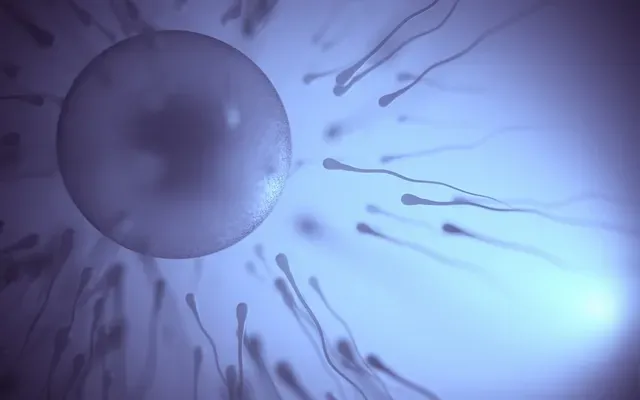
What happens after 2 days of conceiving is that the fertilized egg begins its journey from the fallopian tube toward the uterus, where it will eventually implant. The egg remains viable for only 12 to 24 hours after ovulation, which is why timing intercourse to this narrow window is so important. Fertilization itself occurs in the fallopian tube, where the sperm meets the egg. After fertilization, the embryo starts dividing as it travels through the tube, a process that takes several days before reaching the uterine lining.
At Elite IVF Solutions, we help our patients navigate the biological details of early conception. In the beginning, there’s not much going on biologically at this point and no symptoms occur to signify what is happening inside the body. We educate our patients to understand that in the first 48 hours the process sets up the environment for the next step, implantation, which will happen between day 6-10. We make sure that they have all of the information to prepare their bodies for the next steps in the process.
The Conception Journey From Fertilization to the Uterus
The first 48 hours following fertilisation see the newly-formed embryo starting its journey from the fallopian tube to the uterus. This short window in time is often defined as the ‘fertile period’: the egg can only survive between 12 - 24 hours after being released from the ovary, giving it a brief opportunity for fertilisation to occur. As our reproductive science section details, this timeframe is crucial because the egg’s short lifespan means that fertilisation needs to happen during this time in order to form the zygote.
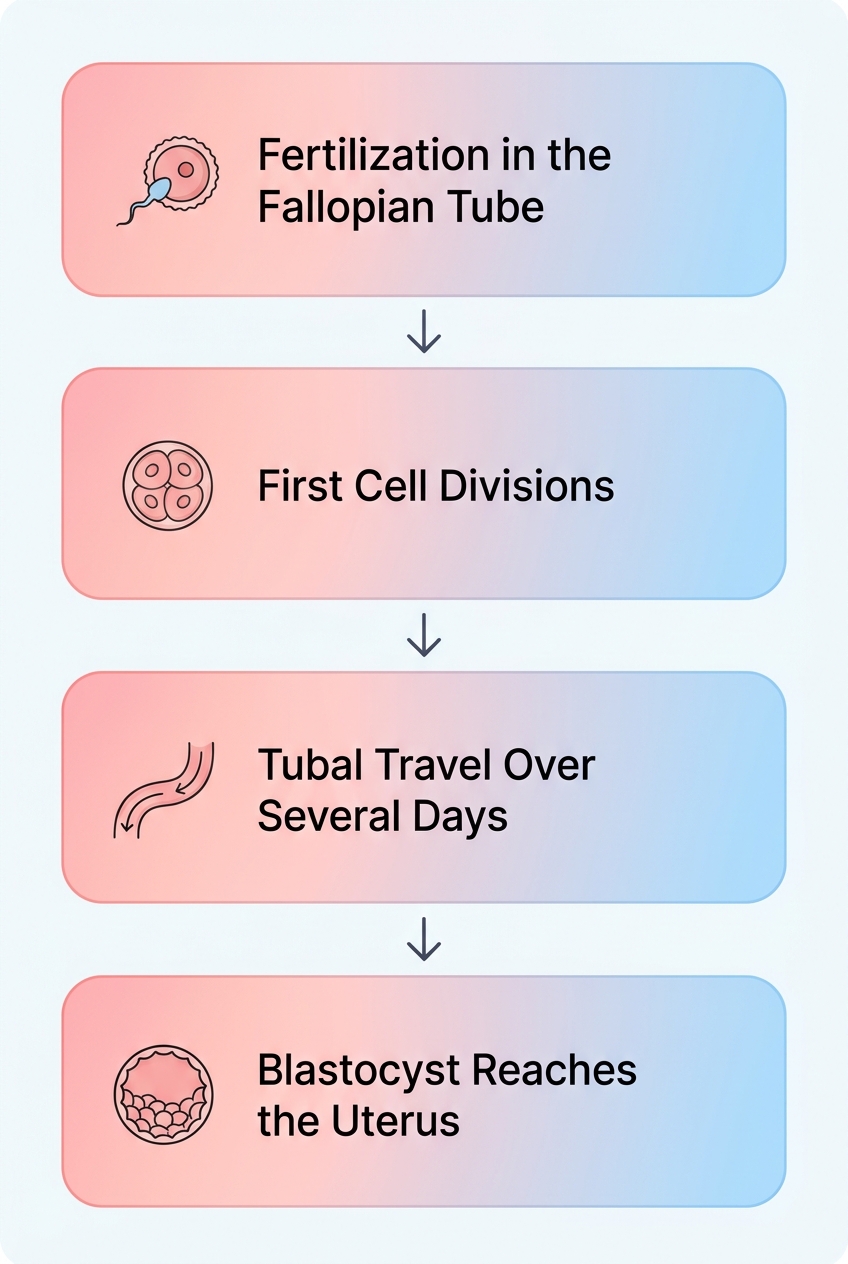
This usually occurs in the fallopian tube where one sperm fertilizes the egg to form a zygote. At this moment the zygote begins to divide rapidly. Within 24 hours it has divided to become two cells, then four, and continues dividing as it makes its way through the fallopian tube. After the second day there have been many cell divisions and the embryo has now formed a solid ball of cells. This process of movement requires coordination between the cilia lining the fallopian tube and subtle contractions of the fallopian tube muscle to push the embryo forward. Together these work to move the embryo steadily toward its goal. By the third day the embryo has usually developed into a 16-cell morula, a ball of cells tightly packed together, on its way through the fallopian tube.
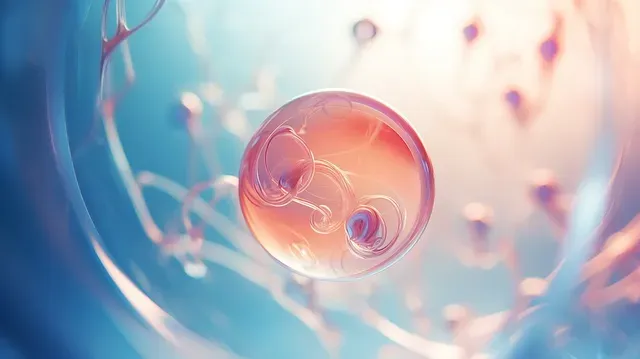
During the following days, the embryo moves down the fallopian tube, changing into a blastocyst as it reaches the uterus. A blastocyst is formed when there is a fluid filled cavity and an outer cell layer. This phase is vital for preparing the embryo to interact with the uterine lining and sets the stage for the biological processes that will follow. The blastocyst's outer layer will eventually form the placenta, while the inner cell mass will develop into the fetus.
We’re about to enter the next step: the blastocyst is approaching the uterine wall ready for implantation. This step prepares for what will happen in the following days.
What Happens After 2 Days of Conceiving
Many people wonder what happens after 2 days of conceiving, the answer lies in remarkable cellular activity as the embryo begins its journey. At this stage, the fertilized egg, now called a zygote, has already completed its first cell division and is rapidly progressing through the fallopian tube toward the uterus. By 48 hours post-fertilization, the zygote typically consists of 4 to 8 cells, each dividing with precision to form a compact cluster. This early division is guided by the genetic material from both parents, ensuring the embryo develops the correct number of chromosomes. The cells at this stage, called blastomeres, remain totipotent, meaning each has the potential to form any tissue in the developing fetus.
The Embryo at 2 Days After Conception
At 48 hours old the embryo is already a little more complicated than before. The process known as cleavage, where it will divide but not grow larger, has just begun. The divisions are directed by the DNA inherited from both of the parents and ensures the embryo receives the right amount of chromosomes to continue dividing properly. The cells, or blastomeres, are totipotent meaning that they can become any type of tissue in the fetus which is still developing. It’s another very important step, because now the journey through the fallopian tube continues with the baby being pushed along by the gentle muscular contractions and cilia lining of the fallopian tube. The environment inside the fallopian tube is ideal for the first cell division because of its regulated temperature and pH which encourage cellular activity.
From 48 Hours to Day 3 and Beyond
By the end of day 3 the embryo is typically in the morula stage, a solid ball of 16-32 cells. At this point the cells start to compact and form tight junctions as they prepare for their next stage of development. The morula is organized such that it can allow cells destined to become the trophoblast (and later the placenta) and inner cell mass (that will become the fetus) to differentiate. This transition marks the progression from a uniform clump of cells to something more organized and specialized. The compacted morula will continue on its journey towards the uterus where it will be ready to implant.
How IVF Labs Mirror This Natural Timeline
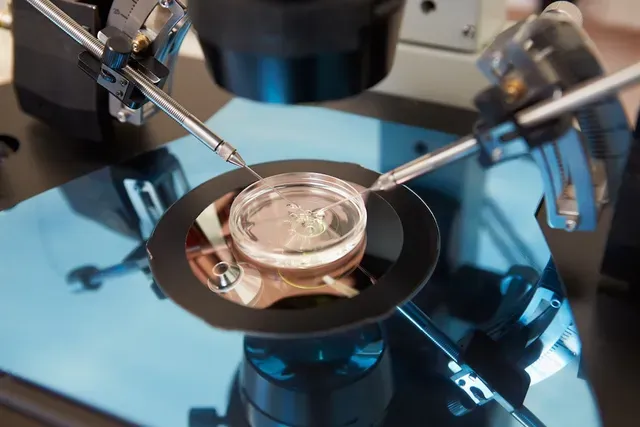
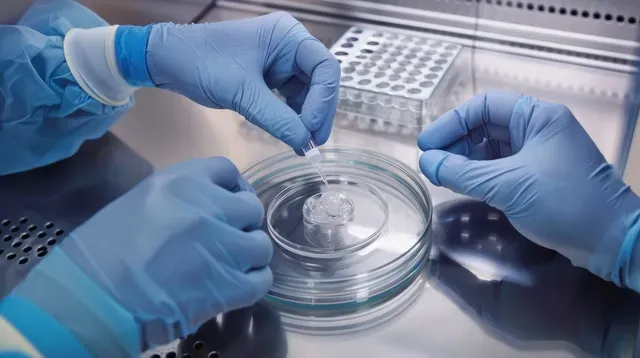
In our IVF laboratory, we replicate this natural progression with precision. Using time-lapse incubators, our embryology team observes the embryo continuously without disturbing its stable environment. This technology allows us to track each division in real time, identifying embryos with the highest potential for successful implantation. By day 5 or 6, many embryos reach the blastocyst stage, where they are ready for transfer or cryopreservation. Our lab follows the same biological milestones as the body, ensuring the embryos we culture are given every opportunity to thrive. The controlled conditions in our lab — including stable temperature, humidity, and gas composition — mimic the fallopian tube environment, supporting the embryo’s natural development timeline.
Early Symptoms and Pregnancy Testing in the First Days
Many ask themselves if they will experience signs of pregnancy 48 hours post conception. And the short answer is no, they won’t. Real pregnancy symptoms are just not possible at this point. The fertilized egg needs some time to travel from the fallopian tube to the uterus, which normally takes 3-4 days. But even once reaching the uterus, the blastocyst has to embed itself into the uterine lining. This is known as implantation. Implantation occurs on day 6-12 after ovulation, mostly on days 8-9. The body does not start producing enough human chorionic gonadotropin (hCG), the hormone measured by home pregnancy tests, before implantation happens. 3 to 4 days 6 to 12 days after ovulation
Many believe that the cramping, light spotting and other body awareness they experience are early pregnancy signs but these symptoms are more likely not related to implantation. It can be a symptom of hormonal shifts, digestive issues, or even stress. It’s important to learn how to differentiate between normal, fleeting discomfort and what your body is actually telling you before the two-week wait.
Can You Feel Pregnancy Symptoms 2 Days After Conception?
By 48 hours post-conception, the embryo hasn’t reached the uterus and isn’t implanted. There is no hormone signaling that can initiate physical signs of early pregnancy if implantation does not occur. Therefore, any signs felt at this point have no medical basis for pregnancy. It’s common to obsess over every pain, but knowing this timing can help manage our expectations and reduce any worry we may feel.
The Signs That Do Appear — When Implantation Begins
As implantation takes place, the body will start producing hCG and progesterone, which can produce some very early symptoms. These generally occur 6 to 12 days after ovulation and often include implantation spotting and mild cramping. Some people notice a small increase in basal body temperature, tender breasts, or a feeling of increased tiredness from the changing hormones. However, none of these symptoms are universal and can differ from person to person.
Remember though, the lack of symptoms does not mean implantation failed. In truth, many people do not have any symptoms at all during this time and it is not a symptom or its absence that can tell you if implantation happened. The only way to know for sure is to test after the body starts producing hCG.
Choosing and Timing a Pregnancy Test
Home pregnancy tests detect hCG, which is only produced after implantation. Because implantation typically occurs 6 to 12 days after ovulation, testing too early — especially before a missed period — often leads to false negatives. The most reliable results come when testing after a missed period, when hCG levels are typically high enough to register on a urine test.
| Detection Method | When It Can Detect hCG | Typical hCG Timing | Where It’s Done |
|---|---|---|---|
| Urine test (home pregnancy test) | After implantation, usually after a missed period | Detects hCG at 25 mIU/mL or higher | At home |
| Blood test | As early as 7–10 days after ovulation | Detects hCG at lower thresholds (often 2 mIU/mL) | At a clinic or lab |
Blood tests are more sensitive and can detect pregnancy earlier than urine tests, so for people undergoing fertility treatments or monitoring hCG levels closely, they can be useful. However, they require a visit to a healthcare provider and are typically reserved for specific clinical situations. For most people, a urine test taken after a missed period provides a reliable and convenient option.
If you're tracking your cycle, waiting for implantation to be complete will give you the most accurate results. If you're doing treatment, you can use regular blood tests during the monitoring period to get exact timing without the guesswork of home testing.
Implantation Timing and Why the Window Matters
What actually takes place during the first two days after conception? The fertilized cell starts to divide quickly as it travels from the fallopian tube towards the uterus, which usually happens over three to four days. Implantation cannot take place yet at this time since the embryo has to reach its blastocyst stage first. It’s only once the embryo gets to the uterus that it needs several more days to actually embed into the uterine wall. first two days after conceiving
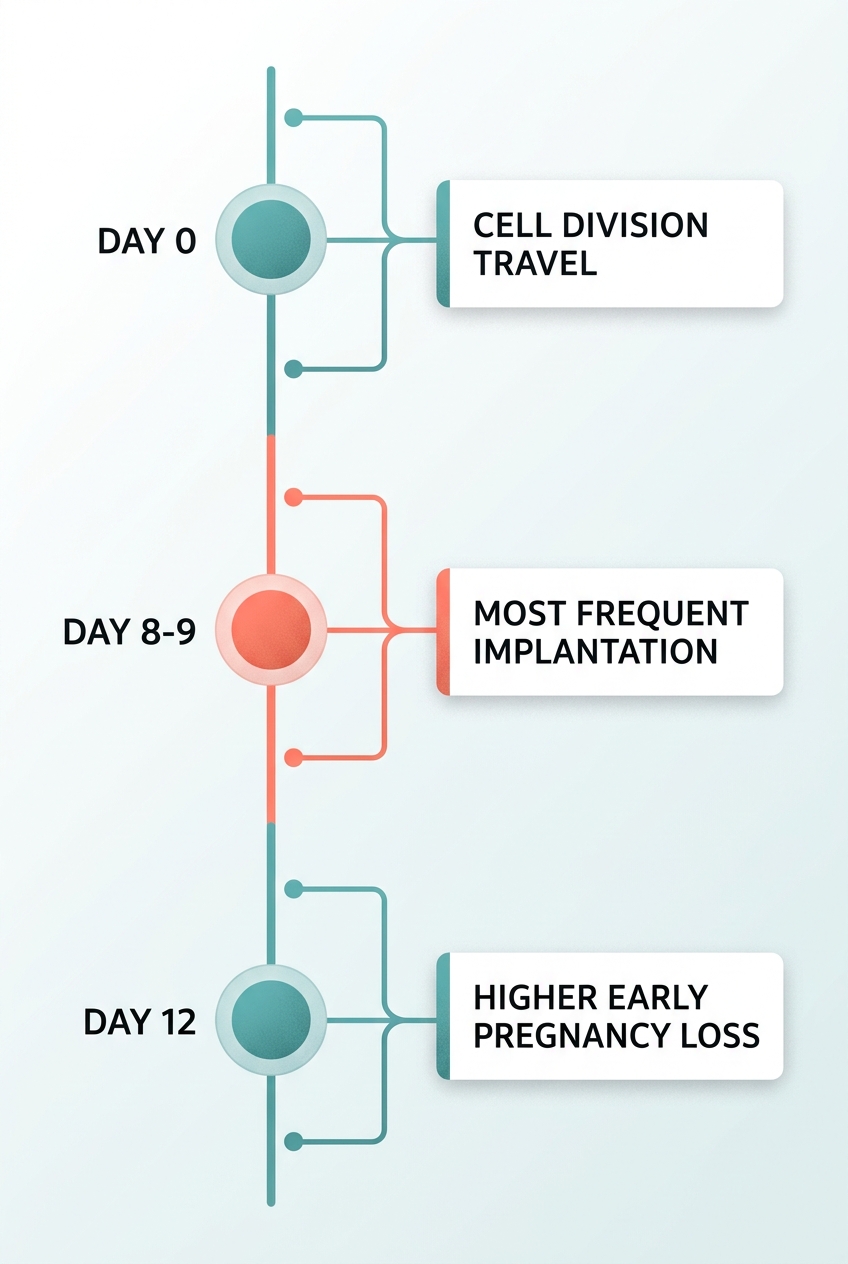
The implantation window falls between 6 to 12 days after ovulation, and 8th or 9th day is the most frequent day to implant. The time line is aligned to when the embryo is growing inside the uterus and changes from a blastocyst to attach itself to the wall of uterus. Eggs are viable only for 12 - 24 hours post ovulation, that is why fertilisation is immediate and implantation occurs in a pre determined biological order.
The following table compares key moments in the implantation timeline:
| timeframe | timeframe | timeframe | timeframe |
|---|---|---|---|
| Days 1–2 after ovulation | Early cell division and travel toward the uterus; implantation is not yet biologically possible | ||
| Days 8–9 after ovulation | Most frequent implantation days; the embryo attaches to the uterine lining | ||
| Day 12 or later after ovulation | Late implantation; associated with higher rates of early pregnancy loss |
Late implantation (after day 12) also corresponds to higher rates of early pregnancy loss, which shows why this time frame is so important. The human chorionic gonadotropin (hCG), the hormone detected by home pregnancy tests, isn’t produced until implantation has been successful. Therefore, testing too early may produce a false negative result, because the embryo has not yet attached itself to the uterine wall and hCG hasn’t been produced yet.
In IVF care, embryos are usually cultured for three to five days until they reach the blastocyst stage before being transferred.
Frequently Asked Questions About the Days After Conception
What happens after 2 days of conceiving?
Within 48 hours of fertilization, the single fertilized cell starts dividing rapidly while traveling through the fallopian tube toward the uterus.
When does the fertilized egg reach the uterus?
It usually takes 3-4 days; the embryo arrives in the uterine cavity on about day 3 or 4.
When does implantation usually occur?
Fertilized eggs usually implant between 6 to 12 days after ovulation, with days 8 and 9 being the most common.
Why can a pregnancy test be negative right after conception?
Home pregnancy tests check for hCG, a hormone that's only released after implantation has taken place; if you test too soon, the result may be a false negative.
Does bed rest help implantation?
There is no clinical evidence supporting the use of bed rest after ovulation or embryo transfer to improve implantation outcomes.
Understanding Your Earliest Days with Confidence
Wondering what happens after 2 days of conceiving? The first days after conception or embryo transfer can feel uncertain, but our team follows ASRM guidelines, including a preference for single-embryo transfers to reduce multiple-birth risks. We’re here to support you through every stage of the IVF process.
Results may vary based on individual patient conditions. Consult a healthcare professional for personalized medical advice; information is for educational purposes only and not a substitute for professional medical advice.
Get Personalized Fertility Guidance Today
Understanding what happens in the earliest days after conception — from the embryo's journey to the implantation window of days 8 and 9 — can bring real clarity to an anxious waiting period. But every fertility journey is different, and biology alone rarely answers the questions that matter most to you personally. The team at Elite IVF Solutions provides comprehensive care in Weston, Florida, from diagnostic testing and ovulation therapies to IVF and genetic testing for patients across South Florida. At a first consultation at 1609 Town Center Circle, you can review your medical history, discuss your timeline, and develop a plan tailored to your circumstances. Appointments can be scheduled by calling 954-999-5955. Results vary based on individual conditions, so professional guidance is the most reliable next step. Reach out today and take the uncertainty out of your earliest days.