













Table of Contents
Your IVF Embryo Transfer Journey at Elite IVF Solutions
The ivf embryo transfer process places a fertilized embryo into the uterus. The overall timeline usually spans two to six weeks and begins the month before the active stimulation cycle. The team at Elite IVF Solutions cares for you with personalized attention through all phases of your journey, including initial ovarian stimulation and follicular monitoring and embryo transfer.
Oocyte retrieval takes place 34 to 36 hours after the administration of the trigger injection and is carried out under ultrasound guidance. Progesterone supplementation is provided post-transfer to support the uterine lining. Pregnancy testing follows 8 to 14 days after the procedure, and most patients are released to their obstetrician by 8 to 10 weeks of gestational age. All patients are different in terms of how they respond to the various medications and the quality of the embryo being transferred. We individually alter our plan based on each of these factors.
Knowing the general timeline of an embryo transfer helps a patient prepare for the embryo transfer process.
Before You Begin: Preparing for Your Embryo Transfer
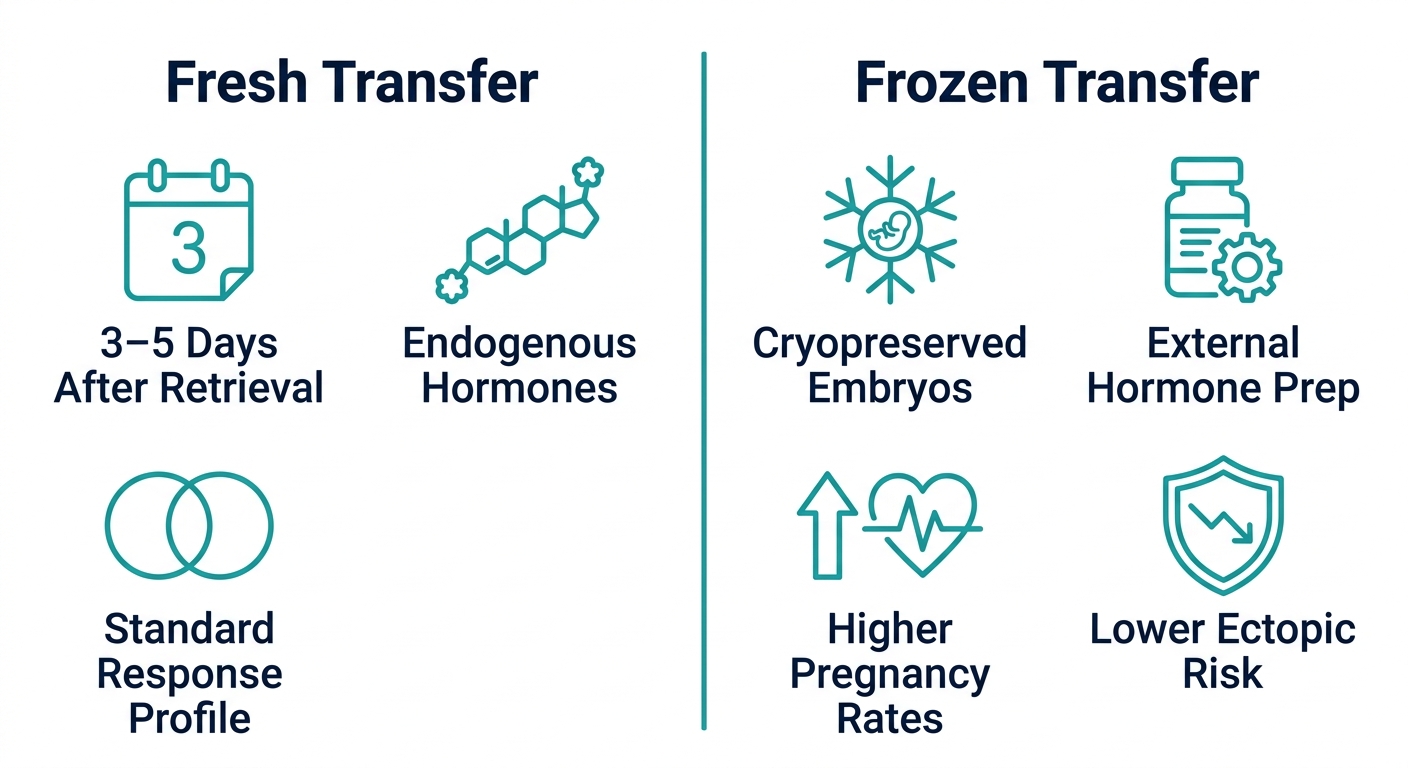
Once you have an understanding of the IVF pathway, the next step is to familiarize yourself with the essential timeline and choices that shape your embryo transfer cycle. The treatment typically spans two to six weeks and begins in the month preceding ovarian stimulation. Oocyte retrieval is performed 34 to 36 hours after the trigger injection. A fresh transfer occurs three to five days after retrieval, relying on the body’s estrogen production to support the uterine lining. Alternatively, cryopreserved embryos can be used in a frozen transfer, which allows the hormonal environment to be controlled with external therapy.
According to the Society for Assisted Reproductive Technology (SART), patients who produce many eggs may achieve higher pregnancy and live birth rates with a frozen transfer, and frozen cycles are associated with a lower risk of ectopic pregnancy and preterm delivery. A pregnancy test is typically conducted 8 to 14 days after the transfer, and patients are usually released to their obstetrician between 8 and 10 weeks of gestation.
We encourage you to review your clinic’s calendar and understand which preparatory steps apply to your specific cycle type. With a clear understanding of the process timeline, you can now consider the specific steps to prepare your body and uterine lining for the transfer.
Step 1: Prepare Your Body and Uterine Lining
Building the endometrium, the uterine lining, is often a carefully planned, timed regimen of estrogen and progesterone. These hormones are designed to create a receptive endometrium that mirrors the embryo’s stage of development.
Instructions
- Follow your medication calendar precisely.
- We track lining thickness and hormone levels through ultrasound and blood work, adjusting doses as needed.
- Report any unexpected symptoms, missed doses, or concerns immediately so we can modify your plan safely.
Why It Matters
An embryo needs a thickened, receptive uterine lining in order to attach and start growing.
Tips
- Avoid smoking and minimize alcohol, both of which can impair endometrial blood flow.
- Eat a balanced diet rich in whole foods, lean proteins, and leafy greens.
- Manage stress with gentle activities such as walking, journaling, or mindfulness.
Whether you are moving towards a fresh cycle or thawing a previously frozen embryo, the timing and preparatory steps adjust accordingly.
Step 2: Decide Between Fresh and Frozen Transfer Timing
Patients decide between fresh and frozen embryo transfers.
Instructions
With a fresh embryo transfer, performed three to five days after egg retrieval, the uterine lining is prepared with the hormones of ovarian stimulation. With a frozen embryo transfer, the lining of the uterus is prepared with estrogen and progesterone. High responders (15 or more eggs retrieved) are associated with higher pregnancy and live-birth rates with frozen cycles, and lower risks for ectopic pregnancy and preterm delivery.
Why It Matters
A frozen transfer may be associated with higher live-birth rates and improved cycle success.
Tips
- Consider a frozen cycle if you plan genetic testing.
Step 3: Get Ready on Transfer Day
Once the timing of the embryo transfer has been finalized, the focus shifts to preparing for the day of the transfer.
Instructions
- Take all prescribed medications exactly as directed, using only small sips of water if needed.
- Eat a light meal; avoid heavy, greasy foods.
- Arrive with a comfortably full bladder: drink about 16–24 ounces of water at least 30–45 minutes before your appointment.
- Wear loose, comfortable clothing and leave valuables at home.
- Plan to arrive 15–20 minutes early to check in and settle.
Why It Matters
A full bladder tilts the uterus for optimal ultrasound visualization, which aids gentle embryo placement. Following medication timing supports your uterine lining’s receptivity.
Tips
We suggest you bring something that helps you relax (book/music, etc.) and arrive early to help you settle into our relaxation environment.
With everything ready, our team will walk you through the next steps of the procedure.
Step 4: Follow the Embryo Transfer Procedure Step by Step
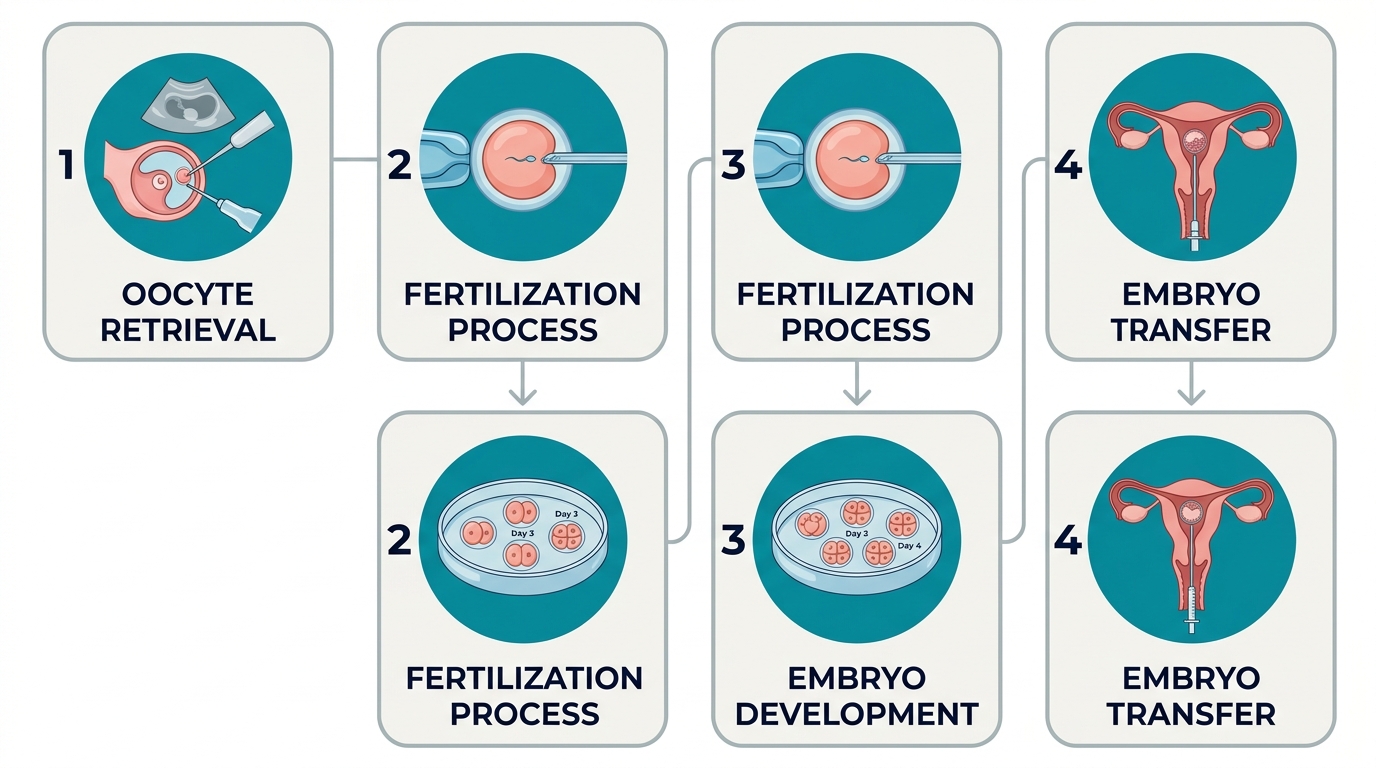
With your bladder comfortably full and you seated in the exam room, the step-by-step process of ivf embryo transfer begins with a speculum. Under the guidance of ultrasound, a soft and flexible catheter is positioned through the cervix and into the uterine cavity to deposit the embryo.
Instructions
- Speculum insertion.
- Embryo identity verification with you.
- Ultrasound-guided passage of a soft catheter through the cervix.
- Embryo deposition in the uterine cavity.
Why It Matters
Ultrasound ensures accurate placement and may improve implantation potential; a soft catheter limits cervical trauma. Brief rest improves comfort without proven benefit from extended bed rest.
Tips
After the transfer is complete, the days ahead shift toward gentle activity and careful monitoring.
Step 5: Care for Yourself Immediately After Transfer
Instructions
After the embryo transfer, we recommend a short rest in our clinic. For the rest of the day, please:
- Avoid strenuous exercise, heavy lifting, and sexual intercourse.
- Keep movement light — gentle walks are fine, but skip jogging or intense workouts.
- Take your prescribed medications on schedule.
- Contact our clinic if you notice any unusual pain, bleeding, or fever.
- Wear clothes and drink plenty of water.
Why It Matters
Resting and limiting activity helps to keep the uterus relaxed, which may decrease contractions and help with implantation.
Tips
- Stay hydrated and stick to your medication timetable.
- Choose gentle distractions: read, listen to music, or have light conversation.
- Avoid hot baths, heating pads, and activities that raise core temperature.
This peaceful beginning starts the two-week wait. A pregnancy test is typically scheduled 8 to 14 days after embryo transfer, giving you a clear timeline as you look for early signs.
Step 6: Navigate the Two-Week Wait and Early Signs
The next step in the IVF embryo transfer process is the two-week wait.
Instructions
At this time, it is recommended to schedule your blood test together. It is generally between 8-14 days after the embryo transfer. In the meantime, continue your prescribed medications, especially progesterone, exactly as directed, and stay gently active unless you are told otherwise.
Why It Matters
Experiencing emotional equilibrium during the two-week wait helps your mental health, and while it cannot impact the outcome of the cycle, it can help you feel more at ease during the process.
Tips
Although mild cramping and bloating may occur, they are most likely caused by the progesterone support and are not signs of early pregnancy. However, if you experience something that concerns you, such as severe pain, heavy bleeding, or a fever, contact your care team.
Once the wait is over, your pregnancy test will provide the definitive answer needed to determine the next steps.
Step 7: Interpret Pregnancy Test Results and Next Steps
A pregnancy test conducted 8 to 14 days after embryo transfer provides the definitive outcome of the IVF cycle, according to the Society for Assisted Reproductive Technology (SART) guidelines.
Instructions
We schedule our pregnancy tests 8 to 14 days after embryo transfer. Patients must carefully follow the instructions provided by our clinic to ensure accurate results.
Why It Matters
Correct interpretation is critical because a positive result leads to scheduling follow-up with an obstetrician, who assumes care generally between 8 and 10 weeks of gestational age. A negative result guides our conversation about next steps and further evaluation.
Tips
If the test is positive, we coordinate your care transition and recommend scheduling promptly. Contact our team to discuss results and next steps. An unclear result may require a repeat test before a final direction can be determined.
Troubleshooting Common Transfer Concerns
The days leading to a pregnancy test after embryo transfer can feel long and full of questions. Patients want to know when they should take a pregnancy test, what symptoms they should look for, and when they’ll transition to obstetric care.
Pregnancy tests are usually scheduled 8 to 14 days after embryo transfer. Once pregnant, patients are usually transferred to an obstetrician 8 to 10 weeks into their pregnancy. This is a routine step that signs the start of ongoing prenatal care and the end of fertility treatment.
It is vital to adhere to the post-transfer instructions provided by your care team. If you experience bleeding, cramping, or any symptoms that cause worry, reach out to our clinic. Even if symptoms seem minor, it is always safer to consult our staff for personalized guidance. Self-diagnosing or using at-home tests ahead of the recommended timeline can lead to unnecessary anxiety.
We know that the two week wait can be very difficult from an emotional standpoint. We have a number of different resources for your emotional well-being and offer support groups to help you cope with the feelings you may have and give you a chance to share your experiences with others going through the same thing. The resources we have available to you throughout your care journey are tailored to your fertility journey.
Just because you have received a positive test, it does not mean that our support care team stops there. Our comprehensive support includes counseling and clinical check-ins.
Embarking on Your Fertility Journey with Confidence
Now that you understand the common concerns and steps involved, you can approach the IVF embryo transfer process with renewed confidence and clarity. At Elite IVF Solutions, our comprehensive fertility services—from diagnostics and IUI to IVF, genetic testing, and emotional support—are designed to provide you with individualized attention and unwavering support.
Keep in mind that results vary based on individual circumstances. The educational content on this website is not a substitute for professional medical advice; always consult a qualified healthcare provider for personalized guidance. Advice received via this site should not be relied upon for personal, medical, legal or financial decisions. Our privacy policy governs how patient information is collected and used; please contact us with any privacy questions. We welcome you to take the next step by contacting our team at 954-999-5955 or info@eliteivfsolutions.com to start a conversation about your fertility goals.
Schedule Your First Visit
Now that you have a thorough understanding of the IVF embryo transfer process, you can confidently take the next step toward building your family. This comprehensive guide has walked you through every stage—from preparing your uterine lining to interpreting pregnancy test results—so you know exactly what to expect. At Elite IVF Solutions, our patient-centric approach ensures that your unique needs and medical history are carefully considered. scheduling a first visit is the ideal way to discuss your personal fertility goals with our experienced team. During your initial consultation, you will receive a personalized evaluation and learn about the tailored treatment options available to you. Our integrated care model combines advanced reproductive technology with emotional and nutritional support, ensuring you are fully supported throughout your journey. Reach out today to book your appointment and begin the path toward parenthood with confidence.