












Table of Contents
Your Guide to Choosing a Fertility Clinic in Miami, Florida
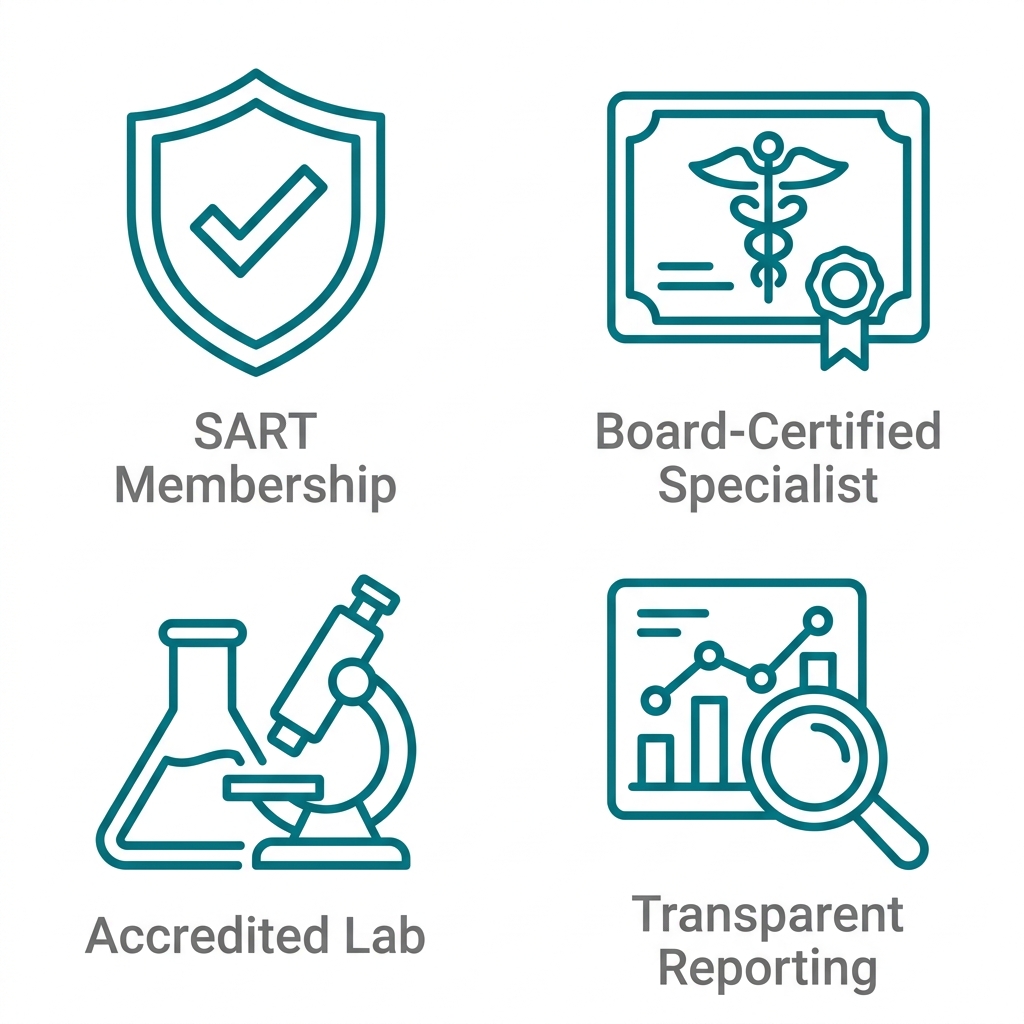
When choosing a fertility clinic in Miami, Florida, it is important to look for a clinic that is a member of SART. The Society for Assisted Reproductive Technology (SART) has established industry standards that require member clinics to be led by board-certified reproductive endocrinologists and to maintain accredited laboratories.
SART and the American Society for Reproductive Medicine (ASRM) have practice and ethics guidelines for member clinics. These guidelines require embryology laboratory accreditation. The College of American Pathologists (CAP) and The Joint Commission (TJC) are examples of accrediting agencies.
Elite IVF Solutions strives to bring SART-level quality to patients seeking a trusted fertility clinic in Miami. From our Weston, Florida location, we serve the Miami area, and offer a variety of family-building services including in-vitro fertilization (IVF), intrauterine insemination (IUI), and genetic testing and fertility preservation. We are committed to transparency and discuss treatment costs during your consultation.We are dedicated to transparency.
Reviewing clinic success rates and evaluating the board certifications of providers are essential as you continue your journey.
Evaluating Clinic Success Rates and Credentials
When choosing a fertility clinic in Miami, Florida, confirming that a practice meets rigorous professional standards is a critical first filter. The most reliable marker of quality is membership in the Society for Assisted Reproductive Technology (SART), the primary oversight body for assisted reproductive technology clinics in the United States. SART member clinics commit to the strict practice and ethics guidelines set by SART and the American Society for Reproductive Medicine (ASRM). That commitment translates into patient protections: clinic leadership must be headed by a board-certified reproductive endocrinologist, and the embryology laboratory must earn accreditation from agencies such as the College of American Pathologists (CAP) or The Joint Commission (TJC), non-negotiable conditions of membership. SART also monitors member clinics' advertising to prevent misleading claims and requires transparent, accurate reporting of clinical outcomes. For South Florida families, this means the data a clinic publishes about its success rates is verified and can be cross-checked on the SART website. Once you have confidence in a clinic's credentials and outcome reporting, the next step is evaluating the full spectrum of services and support it provides.
Assessing Comprehensive Services and Integrated Support
A fertility clinic's ability to meet your individual needs extends well beyond its published success rates; it's defined by the breadth of medical treatments and the holistic support it offers. Comprehensive care spans diagnostics, ovulation induction, IUI, IVF, PGT, fertility preservation, and third-party reproduction. Equally important are integrated support services that embrace a patient-centric philosophy: genetic counseling, emotional well-being programs and support groups, nutrition and exercise guidance, and acupuncture.
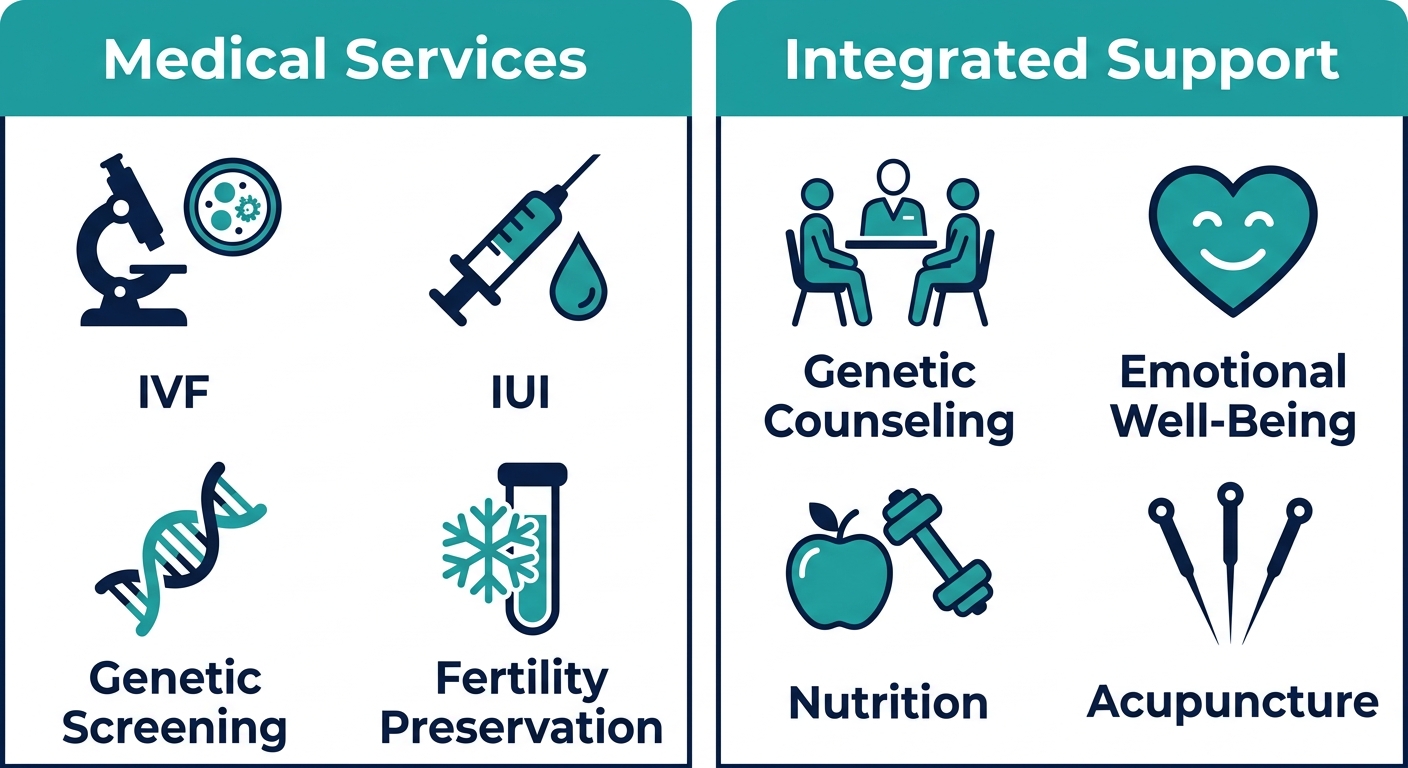
When considering fertility clinics in the Miami area, look for the clinics that have the medical resources to perform the highest level of care and complement that with support resources. The Society for Assisted Reproductive Technology requires its member clinics to be led by board-certified reproductive endocrinologists, to operate accredited laboratories, and to follow transparent marketing practices. After determining that clinics possess these resources and comply with these standards, consider how well the clinics personalize care and focus on your individual needs.
Prioritizing Personalized Care and Patient Experience
We deliver every diagnostic assessment, treatment protocol, and supportive resource within a personalized care framework shaped by each patient's unique medical history and family-building goals. Selecting a fertility clinic in South Florida becomes clearer when you look for a team that designs individualized plans.
We provide integrated support services, including genetic counseling, emotional well-being programs, nutrition guidance, and acupuncture. These services surround medical treatment with resources that address the whole person and help manage the physical and emotional demands of fertility care.
Personalized care is supported by clinics whose clinical leadership includes board-certified reproductive endocrinologists and whose laboratories hold accreditation from a recognized agency, demonstrating a commitment to safety and quality. Active membership in SART confirms that the clinic follows established practice and ethics standards, reports outcomes transparently, and presents marketing claims with integrity. This focuses on safety and quality of care, and gives you, the patient, additional peace of mind when deciding which clinic to use, serving the Fort Lauderdale and Miami areas.
Although individualized care is important, knowing when a clinic does not meet these standards helps avoid pitfalls.
Recognizing Warning Signs When Choosing a Fertility Clinic
We recognize that making a decision about which fertility clinic to use is a daunting experience, and we hope that identifying warning signs will help in this process. Active membership in SART is considered a critical quality indicator by this organization. SART also stipulates that care be led by a board-certified reproductive endocrinologist with specialized training in infertility. There are accredited laboratories, such as those accredited by CAP or TJC. Embryo storage and handling are critical areas for which accreditation is required for a SART clinic. Embryo storage and handling are areas that involve potential safety concerns. Be cautious of clinics making unsubstantiated and/or exaggerated claims regarding their success rates, or not reporting data through SART. SART monitors clinic marketing and the accuracy of reported data. Checking SART's success-rate tools provides transparent information before you commit to a provider.
Key Questions to Ask a Potential Fertility Clinic
- Is the clinic a member of the Society for Assisted Reproductive Technology (SART)? SART membership signals adherence to strict practice and ethics standards set by national reproductive medicine organizations.
- Does the clinic's laboratory hold accreditation from the College of American Pathologists (CAP) or The Joint Commission? Accredited labs meet federal requirements for safe handling and storage of embryos.
- Are the clinic's medical leaders board-certified reproductive endocrinologists? This certification confirms specialized training in infertility diagnosis and treatment.
- How does the clinic verify that its marketing claims and success data are accurate? SART monitors member clinic advertising to prevent deceptive or misleading communication.
Patients in South Florida, from Miami to Weston, can use the same standards when evaluating Elite IVF Solutions as they can other clinics. We, too, value questions about our practices and credentials. Once you have verified a clinic's professional quality, the next step is to assess the cost of the treatments and available financing.
Understanding Fertility Treatment Costs
The cost of treatment is perhaps the most important consideration when choosing a clinic. Clinics that maintain active membership with the Society for Assisted Reproductive Technology (SART) follow rigorous standards that promote transparency. These standards also require the lead physician of the clinic to be a board-certified reproductive endocrinologist, and the laboratory that does the embryology work to be accredited. Having such standards and practices ensures that the information published by the clinic, including cost-related information, is accurate. SART also has standards in place for monitoring member clinic advertisements to prevent misleading marketing. Ultimately, this helps patients avoid unexpected costs. With this background information, we will next discuss how the services and costs of clinics in the Miami area compare to each other.
When selecting a fertility clinic in the Miami area, membership with SART is a key quality indicator. SART requires its member clinics to house laboratories accredited by one of the recognized agencies (i.e. CAP or The Joint Commission) and to have clinical leadership directed by board-certified reproductive endocrinologists to provide a high level of quality in the diagnostic and embryology services offered. SART also maintains standards for clinic marketing to prevent false and misleading advertising, hence, patients can rely on the accuracy of the success claims made by clinics.
For Miami-area patients, clinic location and accessibility are additional practical considerations. Our practice serves the region from our Weston office at 1609 Town Center Circle, providing convenient access without requiring patients to commute to distant facilities. Weighing both SART membership and proximity allows patients to narrow their local fertility clinic choice to options that deliver rigorous, independently verified standards and are realistically located for ongoing treatment cycles.
Your Fertility Clinic Selection Checklist
- Active SART membership means the clinic follows SART/ASRM ethics standards and reports outcomes.
- Clinical leadership by board-certified reproductive endocrinologists ensures care guided by infertility specialists.
- Accredited laboratories (CAP or The Joint Commission) meet federal standards for embryo and gamete handling.
Frequently Asked Questions About Fertility Clinics
Considering quality benchmarks is important when evaluating fertility clinics.
How do I know if a fertility clinic is reputable?
Look for membership in the Society for Assisted Reproductive Technology (SART). Member clinics have board-certified reproductive endocrinologists, accredited labs, and follow ethical standards.
Why are board-certified specialists and accredited labs important?
Board certification confirms specialized infertility training. Accredited labs, monitored by agencies like CAP or TJC, ensure safe tissue handling and storage, protecting embryos and patient health.
What age is best for IVF?
There is no single best age, but success rates decline with age. SART provides age-group data so patients can set realistic expectations.
When should I go to a fertility clinic?
If under 35 and trying for a year, or over 35 for six months, consult a reproductive endocrinologist. Known conditions or irregular cycles also warrant early evaluation.
If you are considering fertility centers in South Florida, we meet these quality benchmarks. Contact us to begin your journey.
Begin Your Fertility Journey with Elite IVF Solutions
SART-member standards are essential when choosing a fertility clinic. Contact us at 954-999-5955. Results may vary based on individual patient conditions. Consult a healthcare professional for personalized medical advice; information is for educational purposes only and not a substitute for professional medical advice.